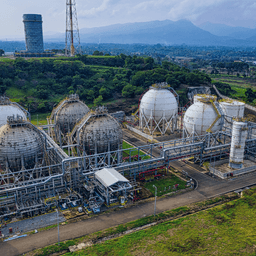
Petroleum System Analysis Course is a specialized technical program designed to strengthen participants’ ability to evaluate hydrocarbon generation, migration, accumulation, preservation, and exploration risk. The course equips participants with practical knowledge of source rocks, reservoirs, seals, traps, burial history, thermal maturity, timing, charge, and petroleum system modeling. Participants learn how petroleum system analysis supports basin evaluation, play development, prospect assessment, exploration strategy, and subsurface decision-making. The program connects geology, geochemistry, stratigraphy, structural interpretation, basin modeling, geophysics, and well data into an integrated exploration workflow. It emphasizes practical methods for identifying petroleum system elements, assessing critical processes, evaluating uncertainties, and communicating exploration chance factors. Special attention is given to source rock richness, maturity windows, migration pathways, trap timing, seal integrity, charge risk, and preservation potential. Participants explore how integrated petroleum system analysis reduces exploration uncertainty and improves prospect ranking. The course is suitable for geologists, geophysicists, geochemists, exploration teams, reservoir professionals, and oil and gas technical staff. By the end, participants will be prepared to apply petroleum system analysis confidently in exploration and basin evaluation projects.
Petroleum system analysis is a core discipline in oil and gas exploration because it explains how hydrocarbons are generated, expelled, migrated, trapped, and preserved in the subsurface. Successful exploration requires more than identifying structures, because every prospect must be tested against the presence and effectiveness of a working petroleum system. This course introduces participants to the integrated technical methods used to evaluate petroleum systems from basin scale to prospect scale. It explains how source rocks, reservoirs, seals, traps, migration pathways, and timing relationships combine to create hydrocarbon accumulations. Participants examine burial history, thermal maturity, organic richness, charge modeling, pressure, preservation, and geological risk. The program emphasizes applied interpretation rather than theory alone, helping professionals connect petroleum system concepts with real exploration decisions. It also highlights how geochemical data, well results, seismic interpretation, regional geology, and basin models support exploration confidence. Participants learn how to evaluate petroleum system uncertainty and communicate risks clearly to technical and management teams. This course provides a structured pathway for building practical petroleum system analysis capability in modern exploration workflows.
Participants will achieve the following objectives by this course:
This program targets a professional audience seeking to improve knowledge and skills:
This course is designed as a five-day professional training program that can be delivered in person, virtually, or through a blended technical learning format, with daily sessions combining conceptual explanation, basin examples, petroleum system exercises, geochemical interpretation, mapping discussions, model review, case-based learning, group activities, and application planning. The recommended duration is thirty to forty training hours, depending on participant background, organizational objectives, basin focus, technical depth, software environment, and desired level of practical interpretation. The program can also be customized as a petroleum system workshop, basin analysis course, exploration risk training, geochemistry foundation program, or corporate subsurface capability development pathway.
The course is delivered by an internationally certified expert with extensive practical and consulting experience in petroleum system analysis, exploration geology, basin modeling, geochemistry, source rock evaluation, play assessment, and subsurface risk analysis. The instructor combines technical education expertise with applied knowledge of hydrocarbon generation, migration, charge analysis, seal and trap evaluation, basin evolution, exploration workflows, and integration with seismic, well, and regional geological data. The delivery approach emphasizes practical application, technical clarity, integrated interpretation, exploration relevance, and measurable capability development for professionals working in petroleum exploration and basin evaluation.
Petroleum System Analysis Course provides professionals with a practical foundation for evaluating hydrocarbon systems and exploration risk. The course helps participants connect source rocks, migration, reservoirs, seals, traps, timing, and preservation into an integrated exploration framework. It strengthens capability in geochemical interpretation, basin understanding, play evaluation, prospect ranking, and risk communication. Participants leave with practical tools to improve basin studies, exploration decisions, and subsurface confidence. This program supports stronger technical integration, reduced exploration uncertainty, and more disciplined oil and gas opportunity evaluation.