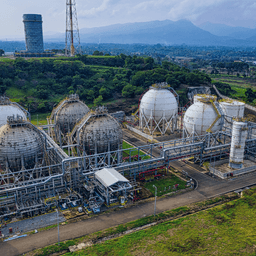
The Structural Interpretation in Petroleum Exploration & Development course provides a comprehensive understanding of structural geology principles applied to hydrocarbon exploration and field development. It focuses on interpreting subsurface structures that control trap formation, reservoir geometry, and hydrocarbon distribution. The course explains how tectonic processes shape sedimentary basins and influence petroleum systems. Participants learn to recognize and interpret faults, folds, fractures, and structural styles. Emphasis is placed on integrating seismic interpretation with geological reasoning. The course highlights the role of structural interpretation in reducing exploration and development risk. Practical workflows are introduced for mapping and structural modeling. Learners develop confidence in interpreting complex subsurface structures. This course establishes a strong foundation for advanced structural analysis in petroleum projects.
The Structural Interpretation in Petroleum Exploration & Development course is designed to build essential skills in subsurface structural analysis. It introduces the fundamental concepts of structural geology relevant to petroleum systems. The course explains how stress regimes and tectonic settings influence structural styles. Participants learn the relationship between structure, stratigraphy, and reservoir behavior. The program emphasizes the importance of accurate structural interpretation in exploration success. It covers the use of seismic data and structural maps in development planning. The course highlights common structural traps and their characteristics. Concepts are presented in a logical and progressive sequence. The scope supports both academic understanding and applied industry practice.
Participants will achieve the following objectives by the Structural Interpretation in Petroleum Exploration & Development course:
This Structural Interpretation in Petroleum Exploration & Development program targets a professional audience seeking to improve knowledge and skills:
This Structural Interpretation in Petroleum Exploration & Development course is available in different durations: 1 week (intensive training), 2 weeks (moderate pace with additional practice sessions), or 3 weeks (a comprehensive learning experience). The course can be attended in person or online, depending on the trainee's preference.
This Structural Interpretation in Petroleum Exploration & Development course is delivered by expert trainers worldwide, bringing global experience and best practices.
1- Who should attend this Structural Interpretation in Petroleum Exploration & Development course?
This course is suitable for geoscientists and professionals involved in subsurface exploration and field development.
2- What are the key benefits of this Structural Interpretation in Petroleum Exploration & Development training?
It enhances the ability to interpret subsurface structures and reduce geological risk.
3—Do participants receive a certificate?
Yes, upon successful completion, all participants will receive a professional certification.
4- What language is the course delivered in?
English and Arabic.
5- Can I attend online?
Yes, you can attend in person, online, or in-house at your company.
The Structural Interpretation in Petroleum Exploration & Development course provides essential skills for understanding subsurface structures. It strengthens the ability to interpret faults, folds, and tectonic styles accurately. Participants gain practical workflows applicable to exploration and development projects. The course supports confident geological decision-making in complex structural settings. It offers long-term professional value in petroleum geoscience careers.